
Forensic weather reports for a specific address and date.
When a claim, a dispute or an incident review comes down to what the weather did at one property at one time, a StormIntel™ Forensic report documents it. Each report is prepared by hand by our meteorologists and forensic data analysts, with 35+ years of experience in forensic meteorology and the insurance industry behind the work.
StormIntel™ is used by 6 of the top 10 U.S. P&C carriers. Net 30 or Net 45 billing for accounts, with nothing to pay upfront.
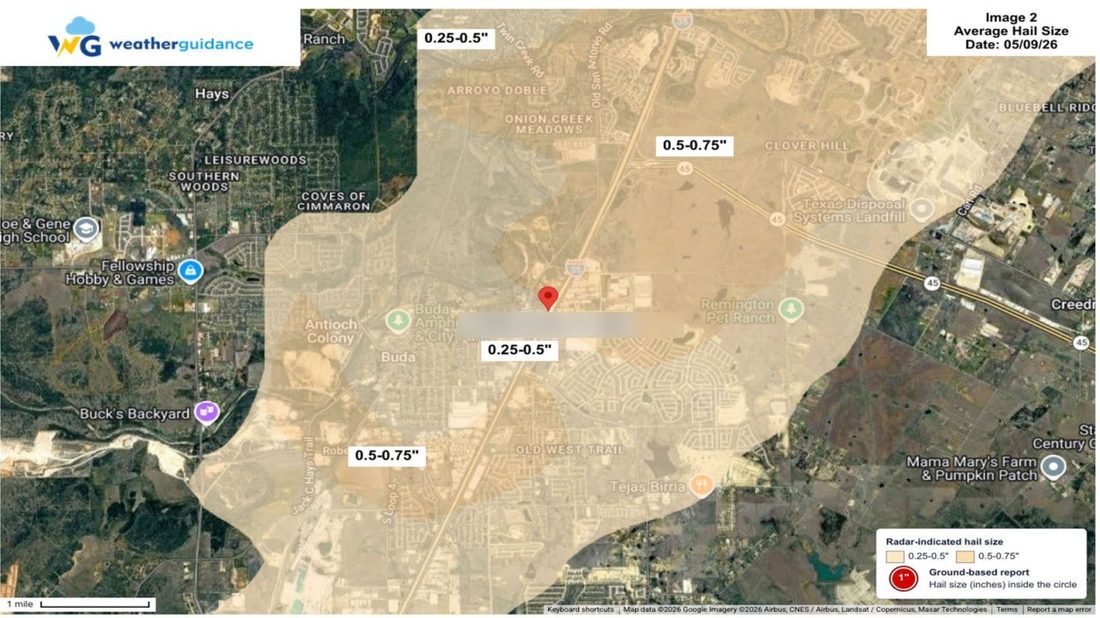
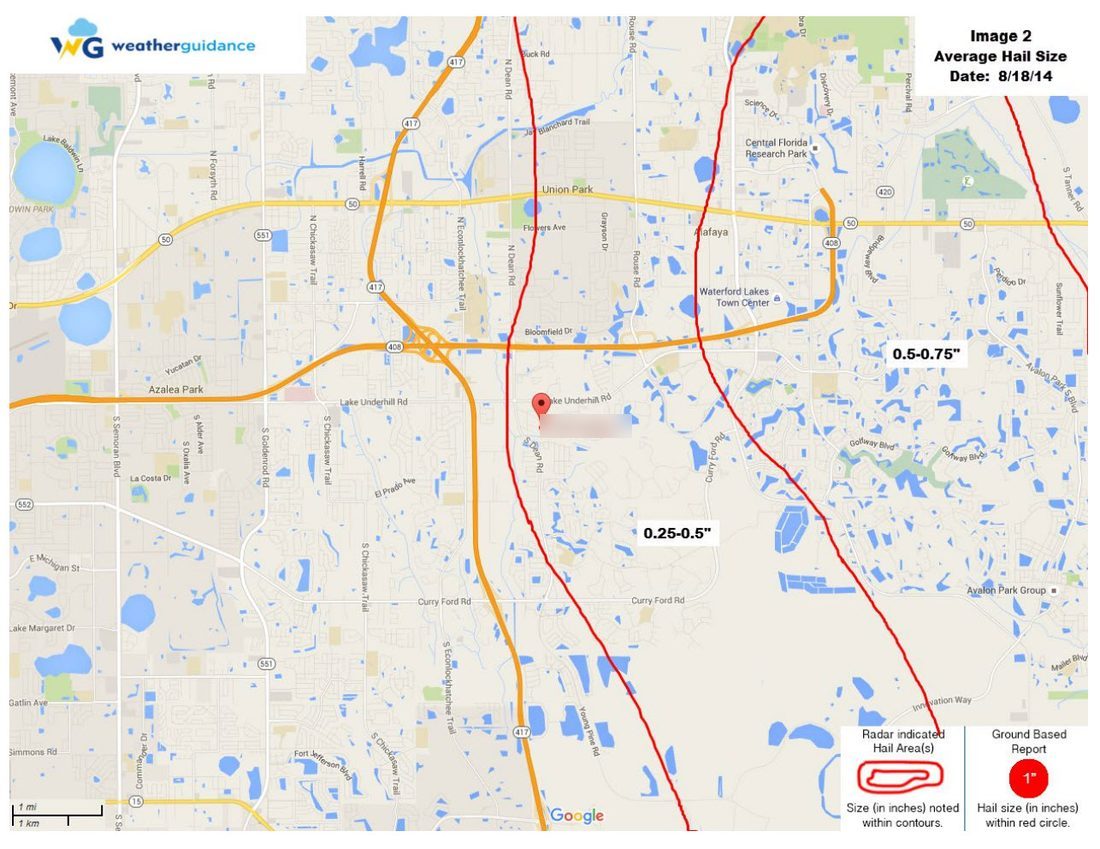
Hail, wind and tornado: two map styles
The standard Forensic report covers hail, wind, tornado and any other peril at the address: a written summary of every event, plus a map of each swath with the property at the center. Choose the map style that works best for you.
Every peril, not only hail and wind
A Forensic report covers any peril. (Hail, wind, rain and snow are also available in a quicker Basic report.)
- Hail
- Wind, including gusts below 50 mph
- Tornado
- Heavy rain
- Flood
- Storm surge
- Snow and ice
- Freeze
- Temperature
- Slip and fall
- Wildfire
- Wildfire smoke
- Power outage
- And more
Lightning has its own reports. See lightning strike verification reports by address.
Specialty Forensic reports
Slip and fall: ice, snow and light at the time of the incident
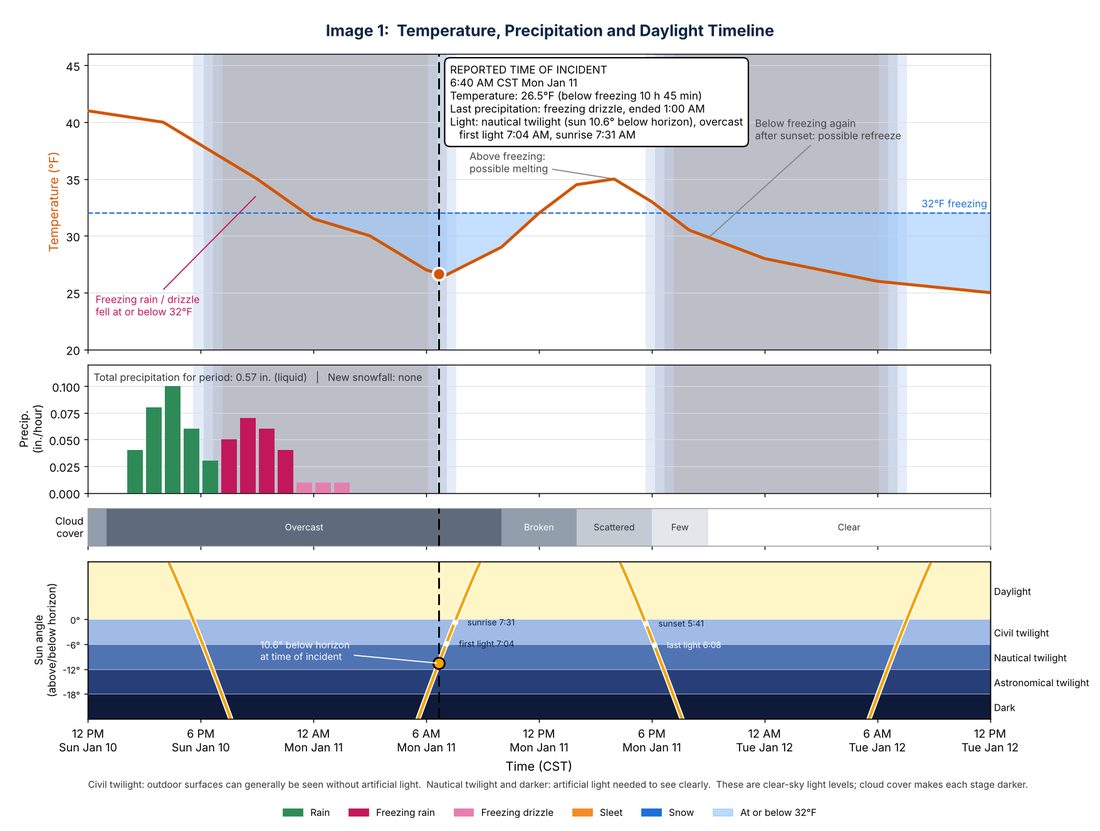
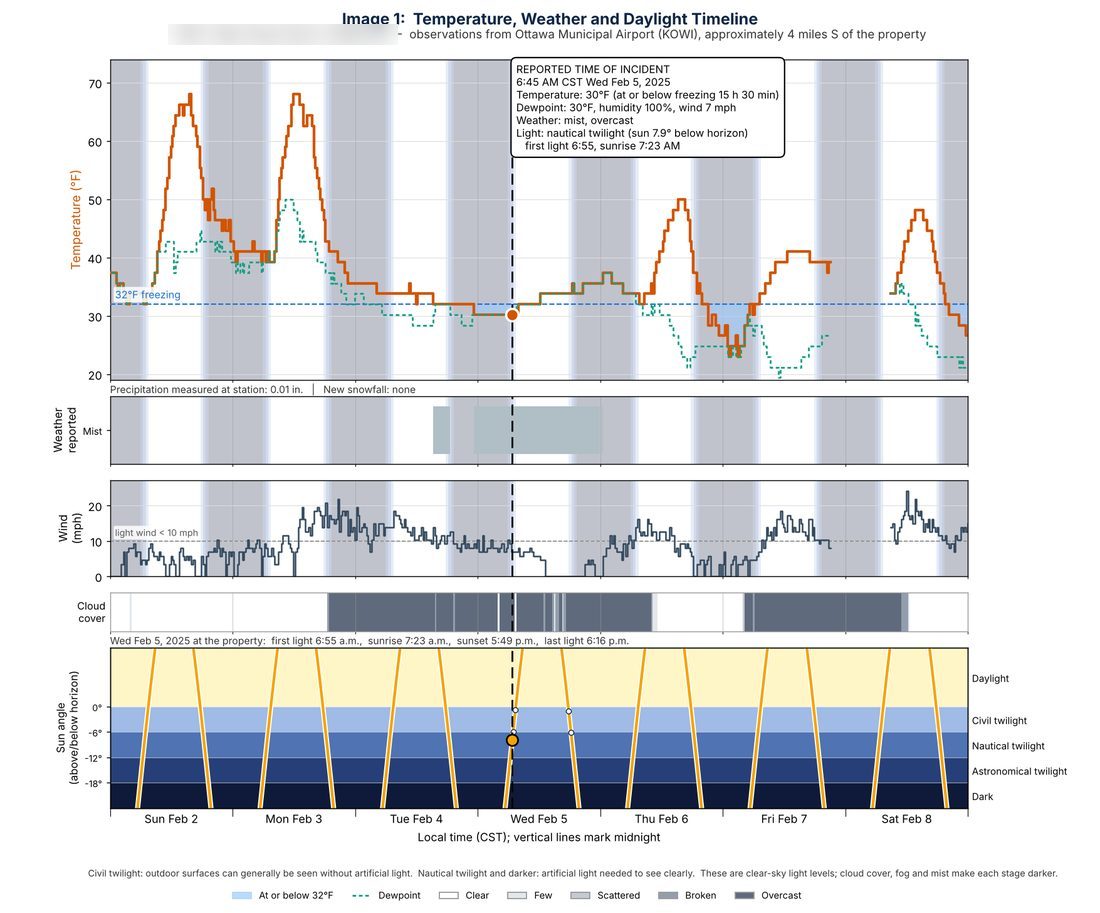
When someone reports a fall on ice or snow, the questions are whether ice could have been there, and whether there was enough light to see it. A Slip & Fall report puts the answers on one timeline for the days around the incident:
- Temperature, with freeze and refreeze times and how long it stayed at or below 32°F
- Precipitation by type and amount: rain, freezing rain, drizzle, sleet, snow
- Sky condition, from clear to overcast, plus mist or fog
- Sunrise, sunset and twilight, with the sun's angle at the reported time, for ambient light
Two chart formats are available, depending on the case.
Wind vs. storm surge timeline
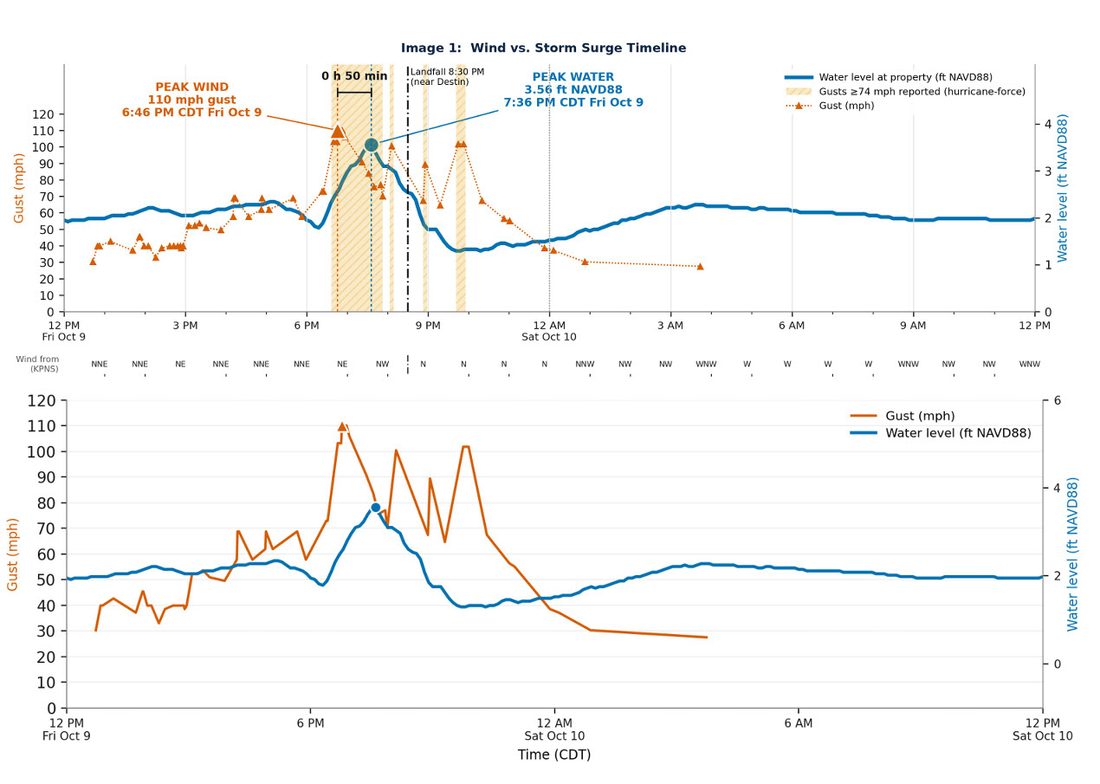
When a hurricane damages a coastal property, the question is often which came first and which did the damage: the wind or the water. A Wind vs. Storm Surge report plots both at the property on one timeline: gusts and wind direction against water level, with the peak of each and the time between them marked.
Engineers and insurance companies use it to separate wind damage from surge damage on a single loss.
Flood
Flood has always been part of our Forensic reports. Depending on the event, a report details where flooding occurred and how far it extended, with observations, stream-gauge values, rainfall amounts and reported or documented impacts near the property.
This documents a flood event on a date of loss. It is not a FEMA flood-zone determination.
Ordering
Forensic reports, including specialty reports, are ordered on the hail and wind damage reports by address page: choose the report type on the order form. Prices start at $29.95, and because most search periods are short, they rarely go higher. Accounts are billed Net 30 or Net 45, per claim or cumulatively, with nothing to pay upfront.
Who orders them
Insurance carriers and independent adjusters, engineers, attorneys, roofing and restoration contractors, property managers and homeowners. Most need the same thing: a clear, documented answer about the weather at one place and time, from someone who does this work every day.
Forensic meteorology consulting
Some questions need more than a single report: a group of properties, an unusual event, or a conversation about what the data does and does not show. A forensic meteorologist in our forensic department can talk it through with you, Monday to Friday, 8am to 5pm Central.
Questions
What is forensic meteorology?
Forensic meteorology, sometimes called weather forensics, is reconstructing what the weather did at a particular place and time after the fact, using radar, ground reports, station observations, gauges and other records. A forensic weather report puts that reconstruction in writing for a specific property.
How is a Forensic report different from a Basic report?
A Basic report lists hail, wind, rain or snow events at an address, at the minimum you select, and is generated immediately. A Forensic report is prepared by a meteorologist, covers any peril, and includes a written summary and maps centered on the property.
Which map style should I choose?
Both show the same storm data. The satellite and road map shades each storm area over aerial imagery; the street map outlines each area in red on a plain road map. Pick whichever reads best for your audience.
What is a slip and fall weather report?
A timeline of temperature, precipitation, freeze and refreeze, sky condition and daylight around the reported time of a fall, so you can see whether ice or snow could have been present and how much light there was.
Can a Forensic report document flooding?
Yes. Flood has always been included in Forensic reports. The report can detail the location and extent of flooding, with observations, gauge values, rainfall amounts and documented impacts.
What is a Wind vs. Storm Surge report?
A timeline of wind gusts, wind direction and water level at the property through a hurricane or tropical storm, showing when each peaked. It helps separate wind damage from surge damage.
Can I order a report for a date several years ago?
Yes. Order a single date of loss, or a history of 1 to 10 years (or more) for the property.
Do Forensic reports include lightning?
No. Lightning has its own Strike Count and Lightning Full Report. See lightning reports.